Showing posts with label reviews. Show all posts

Thursday, January 1, 2015

The Magician's Lie

Spellbinding. The Magician's Lie weaves an interconnected tale as fragile and as convincing as any of the great illusions of the Edwardian era. Steeped in tight historical detail, grandiose architecture, and the art of prestidigitation, Greer Macallister masterfully enchants her audience with the tale of Arden, an illusionist whose freedom and life will hinge on a private performance for a lawman in a rural Iowa sheriff's office during the tired hours of the night.

A story as abusive as it is beautiful, The Magician's Lie is filled with grit and opulence, pain, sorrow, and the countless heartaches that hinge on the word "if." Written with a pace that reminded me of The Night Circus, The Magician's Lie rivals The Prestige in terms of human drama played out on the stage and immaculate storytelling.


I received an e-ARC of this book through NetGalley.


Wednesday, December 10, 2014

Grow a Little Fruit Tree

Beautifully illustrated, and designed with remarkable attention to aesthetics, this is a  delightful combination of information and art. Moreover, the concept behind the book is so simple and seductive: grow a little fruit tree. Grow fruit. Grow it small. Keep it manageable.  That's the sort of thing that makes a reader think- yes, I can do that.

Dealing with the necessary steps involved in growing a small fruit tree, as well as the reasons why one would want to- after all, over producing isn't really going to do you any good, is it? Small trees take up less space, and are easier to both care for and harvest. Filled with charts, diagrams, and decades of experience and anecdotes that will help any gardener remember that an 8' tree really does in deed get larger than one can reach on one's own, if left to it's own devices, Grow a Little Fruit Tree is the perfect guide to growing fruit at home.

I plan to add this to my permanent collection of books on espalier techniques, as it has long been my intent to turn my unused patch of yard the other side of the garage into a small fruit tree orchard. Grow a Little Fruit Tree makes me feel like I have the information I need to do it successfully. The detailed pruning instructions and pictures alone make this a wonderful addition to any gardening library, but like I said, I'm partial to a book that discusses espalier technique.

Beyond being informative, Ann Ralph's writing technique is both accessible and entertaining. Her tone is conversational and a real love of growing fruit trees comes across in the ink. Of course, it all boils down to whether or not I learned something. As I said, I've been looking at growing little fruit trees for quite a while, so it's a subject I've been studying for a while now, and yes. I learned pollination techniques I hadn't yet found in other books on fruit trees, and more about pruning than I knew when I opened it up.  It was well worth the read.

I was overjoyed to have the opportunity to review an e-ARC of this title through NetGalley.

Monday, December 1, 2014

before i go


This was a devastatingly good novel. Colleen Oakley cuts through the space between  the reader and her characters until their sorrows become one. With deft prose, Oakley uses the extremely mundane

and familiar to craft a tale which hits all too close to home.

What makes this book resonate is the humor with which Oakley writes. When it is dark and painful and your reader's heart is bleeding on the floor, Daisy will, with oh so realistic attention span, become distracted by something incongruous and hilarious by juxtaposition.

Uplifting, reaffirming, funny, heartbreaking, and intimate, before i go hurts, heals, and leaves the reader with hope, but mostly, it's just a downright good read, so long as one can read through the tears.

I admit, I found myself on the edge of actively crying while reading on the elliptical at the gym. I held it together until I was home, and reading on the porch swing, where no one would notice the quietly crying woman behind the overgrown yucca, still clutching her e-reader.

My only qualm with this book is that Colleen Oakley wrote the characters with too much blood in their veins: so much that I felt I was losing a friend along with Daisy's best friend and husband. It hurt. It hurt like wiggling a loose tooth. Of course a book about a woman setting out to find a new wife for her husband while she copes with her terminal diagnosis is going to be a tear jerker, but I didn't expect to care as deeply. Brava, Colleen Oakley, brava.

Friday, November 28, 2014

Prince Lestat: This Calls for a Drinking Game

Okay, Anne Rice, I'm looking at you. Some words just don't merit this kind of usage, so while I generally love you and your writing to bits, we have come to a point where the best way to enjoy your paranormal writing is with the
 Preternatural Drinking Game. 
The rules are simple.  Every time you read the word preternatural, take a drink,  and enjoy that tipsy reading experience.  If you prefer to abstain from such libations, then maybe enjoy a square of good chocolate. Then the word won't be quite do irksome.  This game can be played with any of her otherworldly books, so grab some wine, chocolate, or whatever is going to get you through it and play along. 

Monday, September 22, 2014

A Murder of Magpies

One for sorrow, 
two for joy.
A destructive girl,
a damaged boy.

Sarah Bromley knows how to create an atmosphere, draw a reader in, and ease them into her grip until they're so firmly in it that they can't break free, even to get some more tea. Her magic is in the details.

A Murder of Magpies is the story of Vayda, a girl whose family is running from a past so horrifying they dare not even use their names, her brother Jonah, who struggles against the power inside him, his ties to his family, and a yearning to fit in, and Ward, a boy whose utterly dysfunctional home life has left him broken on the inside in more ways than one. I found it ironic that throughout A Murder of Magpies, Vayda, who is so much an outsider to the tiny town of Black Orchard, Wisconsin that she'd been there three years without making a real friend, repeatedly pushed Ward away calling him gadjo- outsider.

The use of body language, in and of itself, made this a worthwhile read. Bromley pays keen attention to detail in constructing her story, which is filled with subtle foreshadowing, wonderful relevant glimpses of backstory, and although it spans several states, the cast of characters and locations are kept few enough to infuse them with a wealth of character and detail.

A strength of A Murder of Magpies lies in the way it deals with uncomfortable territory. Two of the strongest themes in the book which will unsettle readers and give them food for thought and conversation are bullying and consent, which is why I recommend it for book clubs, because there is a wealth of conversation material between the covers. A Murder of Magpies explores the boundaries of will and ethics, probing each character's moral fiber, as well as the reader's. Of course, the dialog the reader has with herself is always more telling than the one she would have with a group of people, but I think it would be hard to walk away from this book without having examined their own view of right and wrong a little more closely.

Regarding consent, A Murder of Magpies deals with consent in a wide spectrum of manifestations, from question of sexual consent to other venues in which one's will can be subverted. Bromley treads boldly, but respectfully into uncomfortable territory, and I respect the choice. Moreover, her portrayal of bullying and the violent undertow of an environment that nurtures bullying struck me as important to the culture in which her characters and readers coexist.

I like that the characters she's created are bookish, even if they're not great students or terribly great with authority. I like that because her readers are probably bookish, because heck, they're reading, right? I like that Vayda and Ward could nearly be any of the readers if their lives were just 7% more peculiar. Vayda is easy to relate to without coming off as a hollow character (ahem, Bella Swan), and Ward too feels like he's just a step removed from so many people while remaining an individual. Even the antagonists rise above archetypes, and it makes for a good read.

I was very fortunate to be able to read an ARC of  A Murder of Magpies. I'd gotten my hands on the three chapter teaser in the spring and was desperate to get my hands on the full manuscript. I plan to buy a signed copy for my bookshelf in the near future, like, you know, when it's available to purchase.


Saturday, September 6, 2014

Crown of Ice

In the tradition of Wicked and the short but well made NBC series Dracula, Crown of Ice, by Vicki Weavil, brings us the time honored tale of the Ice Queen from her perspective- rewriting villain as protagonist and challenging the reader to reassess their own moral compass as they navigate the frozen terrain of difficult choices on a quest to solve what might be one of the most difficult math problems in the history of YA.

I don't know if I liked it best for it's ethical challenges or for the way in which Weavil writes the ice into the heart of Thyra. Much like a freezer, Crown of Ice kept things fresh by supplying me with characters who behave in unpredictable ways (despite this being a retelling of one of my favorite stories) because, particularly in the Snow Queen's case, her actions are just so far outside my box of expectation. When faced with a problem, if I'd solve it by stepping left to avoid it, she'll solve it by walking into it or doing something so unpredictable I can't even predict it enough to give an example.

At the heart of Crown of Ice lie tried and true themes: volition, honesty, and the balance between ends and means. While a thread of romance ties the tale together, it doesn't overpower the rest of the story. This is the sort of story I recommend when longing for snow.

I  received a review e-copy of this title from the publisher.

Wednesday, August 13, 2014

Coral & Bone


I had the opportunity to read Coral & Bone for an upcoming Blog Tour through Xpresso Blog Tours. You can check that review out on We Do Write in September.  Of course, I'm not big on waiting, so, I figured I'd dive on in now.

Can I just say, holy gorgeous cover, Batman?
Coral & Bone by Tiffany Daune was a pretty good book. I enjoyed the story and found myself laying awake later than I'd intended to finish just one more chapter, and then thinking about the characters long after I'd set it down.  It was not a one sitting book for me, partially because of it's length and the amount of world building, and partially because every few chapters I felt the need to pull on my swimming suit and find a pool.  My family jokes that I'm a bit of a mermaid myself, of course, in Coral & Bone, that's not a good thing.

In Coral & Bone, Halen, a nearly 15 year old girl, finds herself having returned to the dreary small beach town where her family lived when her father drowned in open water, which she recalls in images of silvery tails. Of course, Halen also finds fire tingling beneath her touch and goes to school with earplugs in to block the overwhelming sensory input of the world around her. Of course, the run-in with mermaids some six years earlier was nothing compared to the drama ignited when she reencounters them after a mysterious young man shows up on her front stoop.

In the first chapter, Halen passes out during a math test because she took out her ear plugs, and this moment sets the stage for the balancing act between her strengths and weaknesses throughout Coral & Bone. Again and again, her abilities push her over the edge, and again and again, she finds herself diminished by them. In some ways I thought the wording was ableist. Halen frequently questions her sanity toward the beginning, and yes, I imagine anyone being pulled from the mundane world into a realm with different rules and different beings might question their sanity, or at least struggle with disbelief. However, the frequency of "crazy" and "insane" statements detracted from the meaning of the words, because they felt like they were being used too liberally.  I know it's a small point, but it's one that wears on me, as a reader.

Similarly, I really dislike the magic k. I know, it's a personal preference thing, but I wish my e-reader had a way to go through and replace all the "magick" with "magic," because it throws me out of any text that isn't a historical text discussing the trend in neo-mystycism and pagan movements toward adding a k in order to differentiate between prestidigitation and illusion and their own brand of magic. It's like fingernails on the chalkboard of my soul.

Speaking of which, so is a cast of Earth dwellers living in contemporary times comprised entirely with bizarre names. Enter Halen, Daspar, Tage... you get the idea. However, it worked in this case. I liked them and their unique names fit the characters and their backstories in ways that Helen, David, and Teague wouldn't have. So props on that.

I think what I liked the most about Coral & Bone was that it surprised me, even the predictable parts surprised me. Sure, we all see them coming, but they unfold in subtly different ways, and it feels good to read the well foreshadowed event with the tiny little twist. I like that Halen was set up to be a bit of a swooning Bella, easily overwhelmed, easily captured, easily led along, despite obvious personal power, but then BAM- she makes choices without equivocation and sets her own destiny. I like that.

I also really enjoyed the world building Tiffany Daune put in. There's a great amount of detail, her magic system has rules and she follows them, and there is room to expand on it. Coral & Bone also exists outside the realm of quest or romance in that there is a political/social justice/ equality arc as well. While yes, there is the "destroy the bad guy, save the realms" element to the story, it really only serves to illuminate the greater problem, that Elosians truly believe that genocide is alright as long as it makes them feel safer. The social justice issues dominate the landscape of the story, and make for an interesting tale.


Sunday, August 3, 2014

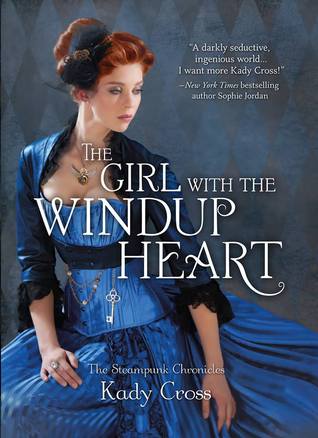
The Girl With the Windup Heart

 I have an increasingly difficult time accepting the bad guy's primary motivation being "revenge," or "I want to make people suffer." If they're not the hero of their own story, they lose some credibility, so this series has increasingly become a tough sell for me. Yes, people are petty. Yes, revenge is a thing, but when revenge and sadism seem to be the whole of a character, it makes it hard for me to care.

Of course, I care about Finely and Griffin, Emily and Sam, Mila, and Jasper, and even Jack Dandy enough to keep coming back for more (even after the over-the-top retreat into bedroom scenes of The Girl with the Iron Touch).  In The Girl With the Windup Heart, I found myself caring ever more about Mila and Jack, but surprisingly less about everyone else. Really, at the end of chapter fifteen, when the arc revolving around Mila's integration seemed to have resolved, I was ready to put it down, because the high drama of Griffin's longstanding battle with The Machinist had just worn itself out with me. Again, I think this has a lot to do with The Machinist's extremely flat characterization and motivation. While I do love the detail Kady Cross has put into her version of the Aether, when it came down to it, between the two plots taking place simultaneously in this book, the one happening in the real world had, for me, more gravitas.

For a book that pays so much attention to artistry, I was surprised by the number of editing issues. Yes, my blog posts are filled with them, but I don't have editors, it's just me, usually at 2am, and possibly dealing with a crying kid. Although I checked it out at the library, it read like an unusually beautiful uncorrected galley.

That said, Kady Cross continues to do what she does best- deliver emotionally charged and romantic adventure in a well constructed alternate past, filled with great passages like, "Finley never thought she'd see a day when she'd be annoyed to be alive." As always, I am impressed with the nuanced world building that has gone into The Steampunk Chronicles. Kady Cross doesn't flinch from writing about the dark underbelly of the Victorian period- particularly gender and class issues, and takes on technological ethics issues as well. Although there are swoon worthy moments and a lot of the time the female characters sit around talking about the men in their lives, the text is not vapid, and definitely has more meat than "just a romance."

Of course, this is the fourth book in the series, and so if you've enjoyed the first three (or four, counting the novella The Strange Case of Finley Jane, which, was my favorite of them all) then you should pick this up as well. I'd rank it below The Girl in the Steel Corset, but above The Girl in the Clockwork Collar and The Girl With the Iron Touch, if that helps.

Saturday, August 2, 2014

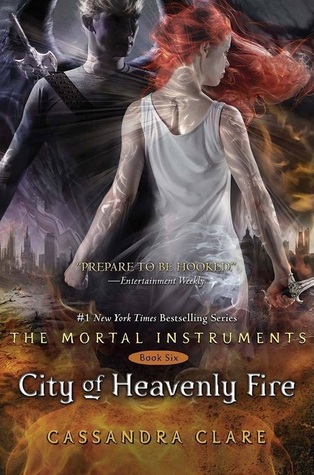
City of Heavenly Fire


Sometimes I just can't write without spoilers, and for that, I apologize. I'll try to keep them out of the first paragraph. Of course, this is the sixth book in the series, so if you haven't started The Mortal Instruments yet, stop reading now- everything is a spoiler (but not so spoilerly as the movie which pretty much blew the entire plot of the next few books... so, if you haven't started, and you think you want to, go ahead and do it. I've stuck with it for six books. It's not Harry Potter, but it's high-drama paranormal adventure, and positively pwns Twilight, even when it's uncomfortable to read).

Now on to the spoilers, because Spoilers make this book what it is- not so much in that the plot turns that make the reader gasp need to be pointed out, but because I feel like it could have been about 150 pages shorter, and a lot of what made it needlessly long was Clare writing around things in that almost spoil the Infernal Devices series. No, that's not true, they really do. When you say to someone who hasn't read the other series "oh look, here's these characters, alive all these years later, with complex relationships that turned out this," when that's the end of the other series, yeah, that's a spoiler. Rather than come out and say who those characters are, Clare spends a multitude of pages writing around who they are so that those who have read it will know, but those who aren't won't- but it becomes redundant and verbose. Yes, it's nice to see characters I loved from the other (my preferred) series return, but cutting to the heart of it wouldn't have hurt anyone. Actually, it might have saved my wrists some strain.

Now, on to the meat of the story. This plot focused on solving problems for everyone more than Clary's internal struggle regarding, well, boys, and the struggle between grasping for your own salvation and self surrender. I liked that. However, once again, her mother proves to only be good at being a plot device who gets herself kidnapped. Really? Can't we go another route? I admit, I'm tired of people getting kidnapped. It was like we'd come full circle back to City of Bones. Clary's mom gets kidnapped by relatives, Simon gets kidnapped by vampires... yeesh, haven't we been there and done that?  The motion of the plot was forward, but the elements were backward.

Again, the main themes were ageism, racism, and whatever ism we use when talking about the extra damaging bigotry that surrounds non-conforming sexuality. If the Shadowhunters have anything down, it's kyriarchy. Although, it sure is nice to see that the younger generations of Shadowhunters are making some positive steps toward a more inclusive and accepting future.

City of Heavenly Fire opens by introducing an entirely new cast of characters who later integrate with our central band of taciturn teenage warriors, and I hope to see them again in subsequent writings by Clare. She has a tendency to recycle characters within her world, and really, theirs was the only story left open in the end.  I particularly liked Emma Carstairs, and hope that things with her and her best friend don't turn to ash because of secret reservations in her heart, and that, right there, is what Clare does best. She creates characters that make you care deeply about them. That is why I still go back for more, even if the whole "kidnapped by Morgensterns" trope is wearing thin. I go back because I care about what happens to the people who inhabit her world.

Wednesday, July 30, 2014

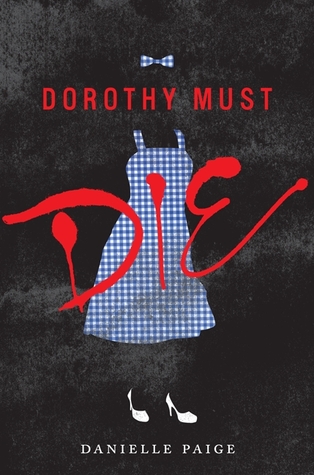
Dorothy Must Die


It was an accident. I didn't mean to fall in love with Amy in the first three paragraphs, and be all in by page three. When I sat down in the parking lot, waiting for a meeting to let out, I didn't realize that I'd brought with me what needed to be a one-sitting book. Had I not needed to drive home halfway through, it would have been.

I'm not the biggest Wizard of Oz fan. Sure, I liked it. Yes, I even watched Return to Oz - don't. It's a terrible movie. Yes, I've read Wicked, Son of a Witch etc, and yes, I've seen Wicked, but.... not my fandom, not my flying monkeys. So, when my YA librarian slipped this to me with a knowing "you'll like it," I wasn't sure I believed her. This is the same woman who thought I'd like the disappointment that was A Discovery of Witches (though I admit it started strong and that was the only time she ever steered me wrong).

I bring up A Discovery of Witches because it's relevant here, and not just because Dorothy Must Die is about witches, which, of course it is kind of is. It's rather difficult to extract witches from Oz and still have a solid story. But A Discovery of Witches, in case you've read it (and yes, I'm comparing "grown up books" to "YA") does this thing that I hate, and it bears bringing up, because about a fifth of the way in, I was pretty sure Dorothy Must Die was going to do it too. In A Discovery of Witches, the first half of the book is a wonderfully detailed story about a brilliant researcher with a magical family, who wants to succeed on her own and goes to great lengths to survive apart from the world of witchcraft, vampires, and all the other creatures one doesn't really believe in, but suddenly finds herself being pulled back into that world. The first half is great world and character building. Then the scenery changes, she goes to France, and becomes a weak, simpering, bodice ripper damsel. The descent into a tawdry romance novel was such a disappointment. For many, the third location and shift in genre toward the end made up for that, but for me, it was hard to bounce back.

Well, when Amy (spoiler alert) ends up in Oz, (are you that surprised? I'm pretty sure that's on the cover, so I guess it's not really a spoiler) and is met by the most painfully beautiful boy she's ever met with these magically green eyes, my heart fell. It was scene change genre change all over again, but I loved her character enough to stick with it, and I'm glad I did. Much to my delight, this did not signal the usual disintegration into a predictable YA romance. Before anyone argues that there's nothing wrong with a romance, no, there isn't anything wrong with a romance, and I kind of hope that this series sees a little more of it over the next few books, but what I absolutely adore about this book is that it's really not about Amy's relationship with some boy, it's about her relationship with herself and her family.

Although set against the backdrop of a dystopian Oz, Dorothy Must Die is really about Amy's personal and ethical journey of self discovery, and any book that starts with the main character telling the reader exactly how long she's known she was trash- that means a lot. This is a story about a girl who makes hard choices in difficult positions, who learns a lot about herself, and slowly overcomes the labels people have heaped on her as well as the ones she's allowed to stick. It's a story about a girl being asked to liberate a people who maybe, just maybe is going to liberate herself instead.

I like it.

Monday, July 21, 2014

Carrot

 140 Character Book Reviews


A quick and colorful story about a bright orange cat with a regular life who gets a notion in her head that it might be nice to be someone else. What I liked best about Carrot was the intensity of color in the illustrations, and their energy. The story was cute and will appeal to kids who like to daydream about being someone else, and who enjoy the reminder that being oneself is a good thing, but when reading it aloud, the rhythm was awkward.

I had the opportunity to review an ebook version of Carrot through Netgalley.

Saturday, July 12, 2014

Guilt-free Baking

I had the pleasure of borrowing a review ARC of Guilt-free Baking through Netgalley.

 Usually, low fat desserts involve a lot of sugar, and low-calorie baking is just a nightmare of chemical soup. But whole grains and solid ingredients carefully balanced to create the perfect baked good? Now that's a concept I can get behind. Of course, they really got me at Lavender Cupcakes. I have a soft spot for cooking with lavender (any edible flower, really, but lavender in specific- it's what defines the cola flavor profile), and when the ingredient list is as smooth as self rising flour, baking powder, baking soda, sea salt, dried lavender, sugar, plain yogurt, vanilla bean paste, milk, and sunflower oil... well, you have an eager audience.

I admit my skepticism is only outweighed by my curiosity when it comes to the chocolate cupcakes with avocado frosting. I may yet have to attempt this recipe. The directions, as with all the directions in this book, are straightforward, and I don't feel they exceed my culinary talents. A great boon to the decision making process, when staring down any of these recipes, is the quick nutrition guideline for each recipe, delineating the calories and fat along with approximate prep time and number of servings. Of course, that only holds if you follow the recipes as written instead of venturing off on your own, using them more as a guildebook than anything else.

All in all, a good book to expand your less guilty indulgence repertoire. 


Monday, July 7, 2014

A Quilting Reviewer's Litmus Test

I have read a lot of quilting books. I don't want to confuse you by pretending to have finished, from plan, to piecing, sandwiching, quilting, and binding very many, but oh, the UFOs I've started. They are numerous, and of varied quality. I have grown up enough to admit that one or two were really just learning experiences- very expensive learning experiences.

As a bibliophile, I'm all about letting the books around me take some of the misery out of the learning process, so for every quilt I've started, I've probably read at least two quilting books. In the last week a friend who has sworn off sewing dropped two paper grocery sacks of quilting books off on my porch. Most of them were a touch more traditional than what I typically go in for, but nearly every one had a specific pattern that I'd long been curious to learn. Cathedral Windows.

Of course, I'd been long intimidated by the first complicated write up I'd ever read of the process, so I sat down and flipped through each book to their directions on how to make the Cathedral Windows block, figuring, whichever books made the process make sense would probably do a better job of explaining the other projects as well.

So that's my new litmus test for traditional quilting books- does it write up a decent explanation of Cathedral Windows, or does it leave the quilting hobbyist rocking in the corner of her sewing dungeon in some upright variation of the fetal position? If it's clear, then it might need to remain on my shelf, if not... well, my shelf space is limited, and I like to support the library's annual book sale.

More on which books I'm keeping and which I'm not even bothering with in days to come. 

Saturday, July 5, 2014

Review: Stitch it Simple: 25 hand sewn projects to make and share


The only way Beth Sheard could have tiled her collection of fun and whimsical projects more honestly than "Stitch it Simple," would be to call this the "Stashbusting Guide to Ditching That Craftersblock."

My sewing dungeon hadn't hardly seen me for anything more than some sorting and absolutely necessary dress alterations for the last four months when I cracked this open, and while I've found a lot of things that almost put me in a sewing mood lately, the combination of extreme simplicity, whimsical print, and a bold fun aesthetic in Stitch it Simple actually had me looking at my fabrc stash thinking, "hey baby, you're no Kaffe Fassett, but you and your friends there would make a glorious set of alphanumeric pillows, and oh, the sweet bunting you could be. Bonus points for extremely easy to follow instructions.

I'm a stickler for easy to follow instructions. In the last week I've been trying sort one simple patchwork technique, and I turned to five printed sources on my shelves before giving up and letting youtube explain it. (Seriously, Cathedral Windows write ups have a tendency to be serpentine.)I really don't have the energy to compare instructions from multiple sources in order to begin a project. It sucks all the joy out of the creative process for me. So, I doubly appreciate that the directions printed in Stitch it Simple really were quite simple. 

Of course, I first picked up a needle and thread with the intent to become their master when I was nine, so if you've never picked up a needle before, the beginning overview of basic techniques may feel like a graduate course, but I felt like it was a good springboard for talking about the uncomplicated projects that followed.

I liked it, and moreover I liked that I now feel compelled to add some more color to my world.

Happy reading, and happier sewing.

I received an e copy of this book in exchange for an honest review.

Saturday, June 14, 2014

We're the Center of the Universe: Science's Biggest Mistakes About Astronomy and Physics

One of the great things about science is that it is a method by which we get to seek answers to the really big questions. Of course, science gets it wrong, a lot, along the way to getting it right. When I was young, a science teacher once introduced himself and then immediately apologized for lying. He said he didn't mean to, but that when you taught science, it was pretty much guaranteed that something the scientific community supported would eventually be proved wrong, but that was okay. Science gets new data, reforms it's ideas, adapts and moves on to solve bigger questions. That's why science is cool.

In that spirit, Christine Zuchora-Walske's book, We're the Center of the Universe: Science's Biggest Mistakes About Astronomy and Physics really makes me smile. It sums up not only the ideas of yore, but why they made sense to the people who came up with them. I like it because it makes me feel like the kid who reads this is going to say "so even if I get the science wrong, there's something to gain from the process of seeking the solutions." I like that.

I like this book because it approaches the history of ideas and illustrates that what seems like the common heiliocentric view of a vast universe we inhabit, in a relatively unpopulated solar system is a very recent concept. These are important ideas and they're presented in a fun and accessible voice. 

This was a fun read and I can think of about ten of my nieces and nephews who  need to read it.


I received a free eARC of this title for review purposes. I have not been compensated in any other way for my review, which was not swayed in any way by the free nature of said ARC.

Friday, June 13, 2014

Fairy Tales from the Brothers Grimm: A New English Version

If you come to adulthood as an ardent lover of fairy tales, then this book may know your true name. An anthology of tales both familiar and somewhat obscure, these are not precisely the tales we all grew up on, but instead are more the tales that were before they were made modern-child-friendly. Of course, I pulled it down off a library shelf that was most assuredly not in the juvenile section, so that doesn't surprise me. In this compilation, Pullman not only takes the reader through the woods and into the realm of the classic fairy tale, but also journeys the extra mile, detailing common variations and explaining the origins of the stories that have so greatly influenced western literature.
I don't recommend a cover to cover read through of this gem. Pick up a tale, read it through. Set it down, let it roll around and stew. Come back to it and enjoy it some more, or else the overwhelming archetypes and formulaic plots may begin to wear you down. Don't blame Pullman, after all, these all started as folk tales. Be warned, these are not the coddled tales you watched as a child, nor are they the safe tales you might read to a small child at bedtime. These are simply fairy tales that speak to the collective unconscious and stir memories we forgot we had. Enjoy them.

Then when you're thoroughly steeped in fairy tales,the rich culture behind them, and the surprising crassness and brutality of them, I recommend picking up Jane Yolen's Briar Rose for something vaguely familiar, and yet completely different.

Thursday, June 12, 2014

Ivy in Bloom: The Poetry of Spring from Great Poets and Writers from the Past


Seldom does a book offer a sweet poetic tale for children and a more in depth poetic journey for the caregiver, but Ivy in Bloom does just that. Illuminating the story of a girl who longs for spring and then delights in it's waking and blooming around her, and filled with lovely illustrations, Ivy in Bloom captures the yearning for spring and the soul refreshing qualities inspired by early flowers and the joy of warmth. Of course, I then moreover relished the wealth of spring poems collected at the end from which the inspiration for Ivy's story was taken.
This is a lovely book, and I enjoyed sharing it with my child.


I received a free eARC of this title for review purposes. I have not been compensated in any other way for my review, which was not swayed in any way by the free nature of said ARC.

Wednesday, June 11, 2014

Handbag Workshop: Design and Sew the Perfect Bag


If you've ever struggled to make your own bag and thrown your hands up in dismay, this is the book you want on your studio's shelf. If you've ever wondered how to "press" your seams when working with leather, you want this book on your studio's shelf. If you've ever gotten tongue tied trying to describe the bag you wish you had, fumbling for the word to describe it, this is the book you need. Complete with a working lexicon of bags, Anna Mazur's Handbag Workshop will help you understand the difference between a messenger, a satchel and the more ladylike Kelly, and why a Minaudiere isn't the same as just any old clutch.

Complete with instructions, pictures, and really key warnings, like a friendly reminder that leather isn't going to heal if you pin it, Handbag Workshop: Design and Sew the Perfect Bag walks you through a plethora of projects, including the hard things, like how to attach diverse bits of hardware and trims for the one of a kind professional and artisan look.

Now, not every project in the book was my cup of tea, but the techniques from every project can be applied to my own designs, and I'm all about that. Ultimately, a good workshop book needs to be adaptable and full of useful tidbits that can be applied to other projects rather than techniques that are so project specific that one will literally never use them for anything else, and Anna  M. Mazur's book really hits it out of the park in terms of knowledge that adds to the reader's functional technique repertoire. Because the instructions are clear and the pictures relieve any remaining questions, this is an easy book to use. The author gets bonus points for breaking down her bag designs into different sections for varying difficulty levels. I think I see a Tiffany Inspired Reversible Tote in my future- and a Cross-Body Sling Bag with Tablet Pocket. I'm a cross-body purse wearer, at the end of the day. It may not be the most elegant, but it is the most functional.

Happy Sewing!


I received a free eARC of this title for review purposes. I have not been compensated in any other way for my review, which was not swayed in any way by the free nature of said ARC.

Friday, June 6, 2014

Hand Stitched Home: Projects to Sew with Pendleton® & Other Wools

Filled with spirit bolstering photographs of great projects to make out of wool blankets that may be sitting underloved in your cedar chest, Hand Stitched Home: Projects to Sew with Pendleton® & Other Wools by Susan Beal offers a plethora of inspiration that doesn't drop off just because you don't own any Pendeltons. I, for one don't, but that doesn't stop me from eying all of the lovely underused wool that has accumulated in my house for the thrilling (maybe I need to get out more) pennant project she outlined. I admit, I have a thing for pennants.
I enjoyed the diversity of projects Susan Beal's book offered, and for me, it was the right book at the right time. I've been on a bit of a purging kick lately. Nobody wants to be a hoarder, but being wasteful is even worse in my head, so a whole book devoted to the repurposing of iconic textiles struck a chord with me. In addition to offering a wide variety of ideas, Hand Stitched Home offered careful and easy to comprehend instructions, and scaleable pattern pieces.
For anyone familiar with using patterns found in magazines or other books of this kind, it will be easy to fall right in with the directions and quickly find yourself on the road to turning vintage flea market finds and linen closet inhabitants into functional pieces in which you take great pride.


I received a free eARC of this title for review purposes. I have not been compensated in any other way for my review, which was not swayed in any way by the free nature of said ARC.

Thursday, June 5, 2014

Pizza on the Grill Expanded: 100+ Feisty Fire-Roasted Recipes for Pizza & More

Mind blown.
Hi. My name is Slee and I'm a pizza addict. When I was a kid my parents used to bribe me to study for my timed tests (yay basic math) with pizza for dinner every time I passed one. Let's just say that my mom was foundered of pizza by the end of the school year, but I could multiply fifteen three digit numbers in a minute with no trouble. I love pizza, and I think that this cookbook was written just for me. So, Elizabeth Karmel and Bob Blumer, if you're reading this review: thanks guys!
I've been saying that we needed to figure out a way to properly cook pizza on the grill for years, so again, thank you. You've changed the way I look at the whole pie.
With a new spin on toppings, and a great walk through on dough making, this recipe book will have you walking through the farmers market eyeing things that before hand might never have gone near a pizza that now most certainly will have to.
I haven't had a chance to hone my skills yet, but I think this technique is completely masterable, and the fact that they've gone the extra mile to develop a gluten free dough? Well, hats off to Karmel and Blumer.
So, if you're a pizza aficionado, own a grill, and want to take the flavor to the next level, I highly recommend this book.

I received a free eARC of this title for review purposes. I have not been compensated in any other way for my review, which was not swayed in any way by the free nature of said ARC.