Showing posts with label YA. Show all posts

Monday, September 22, 2014

A Murder of Magpies

One for sorrow, 
two for joy.
A destructive girl,
a damaged boy.

Sarah Bromley knows how to create an atmosphere, draw a reader in, and ease them into her grip until they're so firmly in it that they can't break free, even to get some more tea. Her magic is in the details.

A Murder of Magpies is the story of Vayda, a girl whose family is running from a past so horrifying they dare not even use their names, her brother Jonah, who struggles against the power inside him, his ties to his family, and a yearning to fit in, and Ward, a boy whose utterly dysfunctional home life has left him broken on the inside in more ways than one. I found it ironic that throughout A Murder of Magpies, Vayda, who is so much an outsider to the tiny town of Black Orchard, Wisconsin that she'd been there three years without making a real friend, repeatedly pushed Ward away calling him gadjo- outsider.

The use of body language, in and of itself, made this a worthwhile read. Bromley pays keen attention to detail in constructing her story, which is filled with subtle foreshadowing, wonderful relevant glimpses of backstory, and although it spans several states, the cast of characters and locations are kept few enough to infuse them with a wealth of character and detail.

A strength of A Murder of Magpies lies in the way it deals with uncomfortable territory. Two of the strongest themes in the book which will unsettle readers and give them food for thought and conversation are bullying and consent, which is why I recommend it for book clubs, because there is a wealth of conversation material between the covers. A Murder of Magpies explores the boundaries of will and ethics, probing each character's moral fiber, as well as the reader's. Of course, the dialog the reader has with herself is always more telling than the one she would have with a group of people, but I think it would be hard to walk away from this book without having examined their own view of right and wrong a little more closely.

Regarding consent, A Murder of Magpies deals with consent in a wide spectrum of manifestations, from question of sexual consent to other venues in which one's will can be subverted. Bromley treads boldly, but respectfully into uncomfortable territory, and I respect the choice. Moreover, her portrayal of bullying and the violent undertow of an environment that nurtures bullying struck me as important to the culture in which her characters and readers coexist.

I like that the characters she's created are bookish, even if they're not great students or terribly great with authority. I like that because her readers are probably bookish, because heck, they're reading, right? I like that Vayda and Ward could nearly be any of the readers if their lives were just 7% more peculiar. Vayda is easy to relate to without coming off as a hollow character (ahem, Bella Swan), and Ward too feels like he's just a step removed from so many people while remaining an individual. Even the antagonists rise above archetypes, and it makes for a good read.

I was very fortunate to be able to read an ARC of  A Murder of Magpies. I'd gotten my hands on the three chapter teaser in the spring and was desperate to get my hands on the full manuscript. I plan to buy a signed copy for my bookshelf in the near future, like, you know, when it's available to purchase.


Thursday, August 14, 2014

Call Me Grim

Elizabeth Holloway hits the ground running and does nothing but pick up pace throughout Call Me Grim, the edgy YA novel that brings new meaning to the phrase "damned if you do, damned if you don't." In Call Me Grim though, Libbi isn't the only one who has to worry about damnation, she's got the soul of her best friend to worry about.

Full confession, I thought the premise had about a 75% chance of being pure cheese. It wasn't. This was like winning the book review lottery. The characters are fully formed, the dialog engaging, motives genuine, plot twists interesting and even surprising. I was impressed. Moreover, I can see this growing into an interesting series that is about something a heck of a lot larger than boy meets girl or girl saves friend, and I like that.

The premise: death saves a girl, but there's a catch, a huge catch, and it just might be a fate worse than death, caught me off guard. I was ready for "girl dies and gets offered a job to atone," or "girl inherits family job of collecting souls," but "girl trades in a chance at heaven to keep her friend from going to hell, all because the current reaper has personal reasons for wanting out of the whole reaper gig," well, where do I send the "thank you for your originality card?"

Pacing aside, what I liked the most about Call Me Grim, was that it contains a lot of food for thought, especially about what it means to be a friend, and the moral weight of our ties to one another. I'm not sure if that's what Holloway was aiming for, but that's what I came away with... well, that, and a heck of a rollercoaster ride of a story.


I received an ARC to review from the publisher.


Wednesday, August 13, 2014

Coral & Bone


I had the opportunity to read Coral & Bone for an upcoming Blog Tour through Xpresso Blog Tours. You can check that review out on We Do Write in September.  Of course, I'm not big on waiting, so, I figured I'd dive on in now.

Can I just say, holy gorgeous cover, Batman?
Coral & Bone by Tiffany Daune was a pretty good book. I enjoyed the story and found myself laying awake later than I'd intended to finish just one more chapter, and then thinking about the characters long after I'd set it down.  It was not a one sitting book for me, partially because of it's length and the amount of world building, and partially because every few chapters I felt the need to pull on my swimming suit and find a pool.  My family jokes that I'm a bit of a mermaid myself, of course, in Coral & Bone, that's not a good thing.

In Coral & Bone, Halen, a nearly 15 year old girl, finds herself having returned to the dreary small beach town where her family lived when her father drowned in open water, which she recalls in images of silvery tails. Of course, Halen also finds fire tingling beneath her touch and goes to school with earplugs in to block the overwhelming sensory input of the world around her. Of course, the run-in with mermaids some six years earlier was nothing compared to the drama ignited when she reencounters them after a mysterious young man shows up on her front stoop.

In the first chapter, Halen passes out during a math test because she took out her ear plugs, and this moment sets the stage for the balancing act between her strengths and weaknesses throughout Coral & Bone. Again and again, her abilities push her over the edge, and again and again, she finds herself diminished by them. In some ways I thought the wording was ableist. Halen frequently questions her sanity toward the beginning, and yes, I imagine anyone being pulled from the mundane world into a realm with different rules and different beings might question their sanity, or at least struggle with disbelief. However, the frequency of "crazy" and "insane" statements detracted from the meaning of the words, because they felt like they were being used too liberally.  I know it's a small point, but it's one that wears on me, as a reader.

Similarly, I really dislike the magic k. I know, it's a personal preference thing, but I wish my e-reader had a way to go through and replace all the "magick" with "magic," because it throws me out of any text that isn't a historical text discussing the trend in neo-mystycism and pagan movements toward adding a k in order to differentiate between prestidigitation and illusion and their own brand of magic. It's like fingernails on the chalkboard of my soul.

Speaking of which, so is a cast of Earth dwellers living in contemporary times comprised entirely with bizarre names. Enter Halen, Daspar, Tage... you get the idea. However, it worked in this case. I liked them and their unique names fit the characters and their backstories in ways that Helen, David, and Teague wouldn't have. So props on that.

I think what I liked the most about Coral & Bone was that it surprised me, even the predictable parts surprised me. Sure, we all see them coming, but they unfold in subtly different ways, and it feels good to read the well foreshadowed event with the tiny little twist. I like that Halen was set up to be a bit of a swooning Bella, easily overwhelmed, easily captured, easily led along, despite obvious personal power, but then BAM- she makes choices without equivocation and sets her own destiny. I like that.

I also really enjoyed the world building Tiffany Daune put in. There's a great amount of detail, her magic system has rules and she follows them, and there is room to expand on it. Coral & Bone also exists outside the realm of quest or romance in that there is a political/social justice/ equality arc as well. While yes, there is the "destroy the bad guy, save the realms" element to the story, it really only serves to illuminate the greater problem, that Elosians truly believe that genocide is alright as long as it makes them feel safer. The social justice issues dominate the landscape of the story, and make for an interesting tale.


Sunday, August 3, 2014

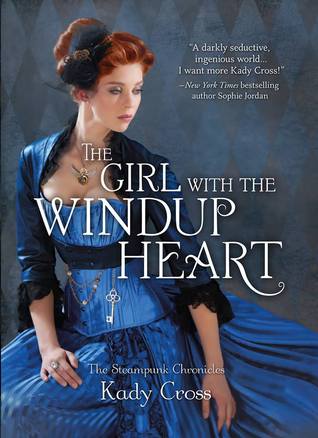
The Girl With the Windup Heart

 I have an increasingly difficult time accepting the bad guy's primary motivation being "revenge," or "I want to make people suffer." If they're not the hero of their own story, they lose some credibility, so this series has increasingly become a tough sell for me. Yes, people are petty. Yes, revenge is a thing, but when revenge and sadism seem to be the whole of a character, it makes it hard for me to care.

Of course, I care about Finely and Griffin, Emily and Sam, Mila, and Jasper, and even Jack Dandy enough to keep coming back for more (even after the over-the-top retreat into bedroom scenes of The Girl with the Iron Touch).  In The Girl With the Windup Heart, I found myself caring ever more about Mila and Jack, but surprisingly less about everyone else. Really, at the end of chapter fifteen, when the arc revolving around Mila's integration seemed to have resolved, I was ready to put it down, because the high drama of Griffin's longstanding battle with The Machinist had just worn itself out with me. Again, I think this has a lot to do with The Machinist's extremely flat characterization and motivation. While I do love the detail Kady Cross has put into her version of the Aether, when it came down to it, between the two plots taking place simultaneously in this book, the one happening in the real world had, for me, more gravitas.

For a book that pays so much attention to artistry, I was surprised by the number of editing issues. Yes, my blog posts are filled with them, but I don't have editors, it's just me, usually at 2am, and possibly dealing with a crying kid. Although I checked it out at the library, it read like an unusually beautiful uncorrected galley.

That said, Kady Cross continues to do what she does best- deliver emotionally charged and romantic adventure in a well constructed alternate past, filled with great passages like, "Finley never thought she'd see a day when she'd be annoyed to be alive." As always, I am impressed with the nuanced world building that has gone into The Steampunk Chronicles. Kady Cross doesn't flinch from writing about the dark underbelly of the Victorian period- particularly gender and class issues, and takes on technological ethics issues as well. Although there are swoon worthy moments and a lot of the time the female characters sit around talking about the men in their lives, the text is not vapid, and definitely has more meat than "just a romance."

Of course, this is the fourth book in the series, and so if you've enjoyed the first three (or four, counting the novella The Strange Case of Finley Jane, which, was my favorite of them all) then you should pick this up as well. I'd rank it below The Girl in the Steel Corset, but above The Girl in the Clockwork Collar and The Girl With the Iron Touch, if that helps.

Saturday, August 2, 2014

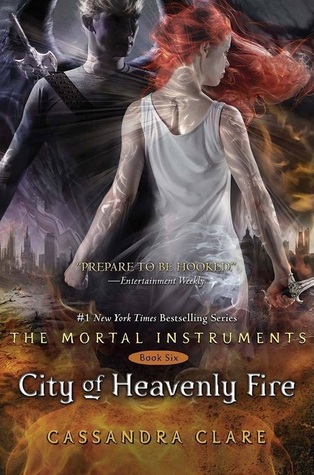
City of Heavenly Fire


Sometimes I just can't write without spoilers, and for that, I apologize. I'll try to keep them out of the first paragraph. Of course, this is the sixth book in the series, so if you haven't started The Mortal Instruments yet, stop reading now- everything is a spoiler (but not so spoilerly as the movie which pretty much blew the entire plot of the next few books... so, if you haven't started, and you think you want to, go ahead and do it. I've stuck with it for six books. It's not Harry Potter, but it's high-drama paranormal adventure, and positively pwns Twilight, even when it's uncomfortable to read).

Now on to the spoilers, because Spoilers make this book what it is- not so much in that the plot turns that make the reader gasp need to be pointed out, but because I feel like it could have been about 150 pages shorter, and a lot of what made it needlessly long was Clare writing around things in that almost spoil the Infernal Devices series. No, that's not true, they really do. When you say to someone who hasn't read the other series "oh look, here's these characters, alive all these years later, with complex relationships that turned out this," when that's the end of the other series, yeah, that's a spoiler. Rather than come out and say who those characters are, Clare spends a multitude of pages writing around who they are so that those who have read it will know, but those who aren't won't- but it becomes redundant and verbose. Yes, it's nice to see characters I loved from the other (my preferred) series return, but cutting to the heart of it wouldn't have hurt anyone. Actually, it might have saved my wrists some strain.

Now, on to the meat of the story. This plot focused on solving problems for everyone more than Clary's internal struggle regarding, well, boys, and the struggle between grasping for your own salvation and self surrender. I liked that. However, once again, her mother proves to only be good at being a plot device who gets herself kidnapped. Really? Can't we go another route? I admit, I'm tired of people getting kidnapped. It was like we'd come full circle back to City of Bones. Clary's mom gets kidnapped by relatives, Simon gets kidnapped by vampires... yeesh, haven't we been there and done that?  The motion of the plot was forward, but the elements were backward.

Again, the main themes were ageism, racism, and whatever ism we use when talking about the extra damaging bigotry that surrounds non-conforming sexuality. If the Shadowhunters have anything down, it's kyriarchy. Although, it sure is nice to see that the younger generations of Shadowhunters are making some positive steps toward a more inclusive and accepting future.

City of Heavenly Fire opens by introducing an entirely new cast of characters who later integrate with our central band of taciturn teenage warriors, and I hope to see them again in subsequent writings by Clare. She has a tendency to recycle characters within her world, and really, theirs was the only story left open in the end.  I particularly liked Emma Carstairs, and hope that things with her and her best friend don't turn to ash because of secret reservations in her heart, and that, right there, is what Clare does best. She creates characters that make you care deeply about them. That is why I still go back for more, even if the whole "kidnapped by Morgensterns" trope is wearing thin. I go back because I care about what happens to the people who inhabit her world.

Wednesday, July 30, 2014

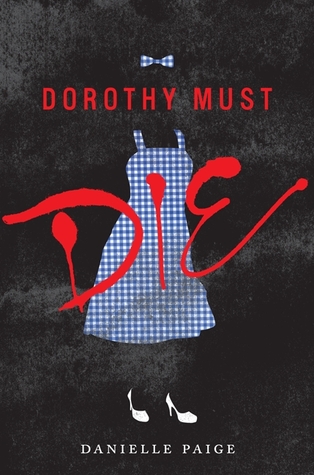
Dorothy Must Die


It was an accident. I didn't mean to fall in love with Amy in the first three paragraphs, and be all in by page three. When I sat down in the parking lot, waiting for a meeting to let out, I didn't realize that I'd brought with me what needed to be a one-sitting book. Had I not needed to drive home halfway through, it would have been.

I'm not the biggest Wizard of Oz fan. Sure, I liked it. Yes, I even watched Return to Oz - don't. It's a terrible movie. Yes, I've read Wicked, Son of a Witch etc, and yes, I've seen Wicked, but.... not my fandom, not my flying monkeys. So, when my YA librarian slipped this to me with a knowing "you'll like it," I wasn't sure I believed her. This is the same woman who thought I'd like the disappointment that was A Discovery of Witches (though I admit it started strong and that was the only time she ever steered me wrong).

I bring up A Discovery of Witches because it's relevant here, and not just because Dorothy Must Die is about witches, which, of course it is kind of is. It's rather difficult to extract witches from Oz and still have a solid story. But A Discovery of Witches, in case you've read it (and yes, I'm comparing "grown up books" to "YA") does this thing that I hate, and it bears bringing up, because about a fifth of the way in, I was pretty sure Dorothy Must Die was going to do it too. In A Discovery of Witches, the first half of the book is a wonderfully detailed story about a brilliant researcher with a magical family, who wants to succeed on her own and goes to great lengths to survive apart from the world of witchcraft, vampires, and all the other creatures one doesn't really believe in, but suddenly finds herself being pulled back into that world. The first half is great world and character building. Then the scenery changes, she goes to France, and becomes a weak, simpering, bodice ripper damsel. The descent into a tawdry romance novel was such a disappointment. For many, the third location and shift in genre toward the end made up for that, but for me, it was hard to bounce back.

Well, when Amy (spoiler alert) ends up in Oz, (are you that surprised? I'm pretty sure that's on the cover, so I guess it's not really a spoiler) and is met by the most painfully beautiful boy she's ever met with these magically green eyes, my heart fell. It was scene change genre change all over again, but I loved her character enough to stick with it, and I'm glad I did. Much to my delight, this did not signal the usual disintegration into a predictable YA romance. Before anyone argues that there's nothing wrong with a romance, no, there isn't anything wrong with a romance, and I kind of hope that this series sees a little more of it over the next few books, but what I absolutely adore about this book is that it's really not about Amy's relationship with some boy, it's about her relationship with herself and her family.

Although set against the backdrop of a dystopian Oz, Dorothy Must Die is really about Amy's personal and ethical journey of self discovery, and any book that starts with the main character telling the reader exactly how long she's known she was trash- that means a lot. This is a story about a girl who makes hard choices in difficult positions, who learns a lot about herself, and slowly overcomes the labels people have heaped on her as well as the ones she's allowed to stick. It's a story about a girl being asked to liberate a people who maybe, just maybe is going to liberate herself instead.

I like it.

Monday, May 26, 2014

These Broken Stars

I have a feeling this isn't the only time you're going to see me write about These Broken Stars. Themes and moments from it haunt me: when I'm in the shower, walking to the library, feeling the sun on my neck. As I said in my longer review over on We Do Write, I read it twice, back to back. I can't think of another book I've done that with. There are a handful of books I've read more than once, The Mists of Avalon, The Forest House, Dracula, In Conquest Born, Pride & Prejudice, a few Anne Rice novels that captured my heart as a youth. However, these were lovingly revisited years later. I can't think of another time I've set something down and immediately reread it. So, head over to We Do Write for some of my early thoughts. I'm sure to have more of them, because I'm sure I'll read
it again and have more to say.

Saturday, January 25, 2014

RATGIRL: Song of the Viper


Krause's dystopian tale delves into the heart of what people will do to survive, and how far from the life they want they are willing to go in order to provide for the people they love. All in all, I liked it. I liked
the way she created characters who were despicable in the same ways that the despicable people we've all met would be if put in power or under strain, and I liked that she took the types of good people who are everywhere, and had them reacting realistically within the tight prison of poverty, fear, and darkness resulting from the corruption of the local government as well as the threat of the sun. These aren't heroes who can't be touched by minor irritations like chapped lips- they're real, they're hungry, and they're going to survive.

You can read my full review on We Do Write.

Wednesday, December 4, 2013

Dream Girl

 Biblivoracious

       Despite writing with powerful and excellent voice and despite fabulous imagery, S.J. Lomas' novel, Dream Girl, just couldn't keep me hooked. Strong characters in interesting situations could not make up for how often I found myself thrown from the story by the tense switches between character. Christine looked, Gabriel sees, she ran, he runs, she dreamed, he wrote. It was too distracting, which is sad, because Lomas has a lot to offer, and the dark atmospheric qualities of Dream Girl make me want to be able to recommend it. I hope to see more from this author in the future, because seldom does a writer establish such strong voices so quickly in a story, and I'd like to read some more from S.J.'s imagination.

Friday, November 15, 2013

Infinityglass


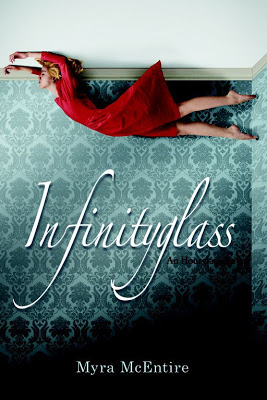
Infinityglass (Hourglass, #3)In Infinityglass, the third of Myra McEntire's Hourglass novels, we have the pleasure of getting to know McEntire's world through the eyes of Dune and the as-yet-unmet  Hallie, whose particular talents threaten to turn the world of the Hourglass team inside out. I admit, it was with great trepidation that I picked up this novel. While Hourglass had nestled into my heart, the narrative choices in Timpepiece left me feeling disappointing. I like to be able to like my main characters, and it took too long to get there in Timepiece. When I started Infinityglass, I worried that would again be the case, and I felt my fears were confirmed in the first chapter, but by the second my mind was changed, and I am glad to have kept with it.
Infinityglass flaunts McEntire's meticulous world building in a quick paced story full of a delicious blend of angst and yearning. Complete with family dysfunction and deep secrets, McEntire kept me turning pages well into the wee hours of the night. I liked the way that Infinityglass examines the concepts of identity and agency. While also delving into interpersonal relationships, particularly friendships, the relationship between Hallie and her concept of self was the most powerful.
The entire Hourglass series is well worth reading if you're looking for something that will pull at your heart strings in a world that is at best, wibbly wobbly and timey wimey.


You can follow along for 140 character reviews @Biblivoracious, or find more of my reviews at Paisley and Pretties and We Do Write.